
What Does a DNA Health Test Tell You? A Plain-English Guide
|
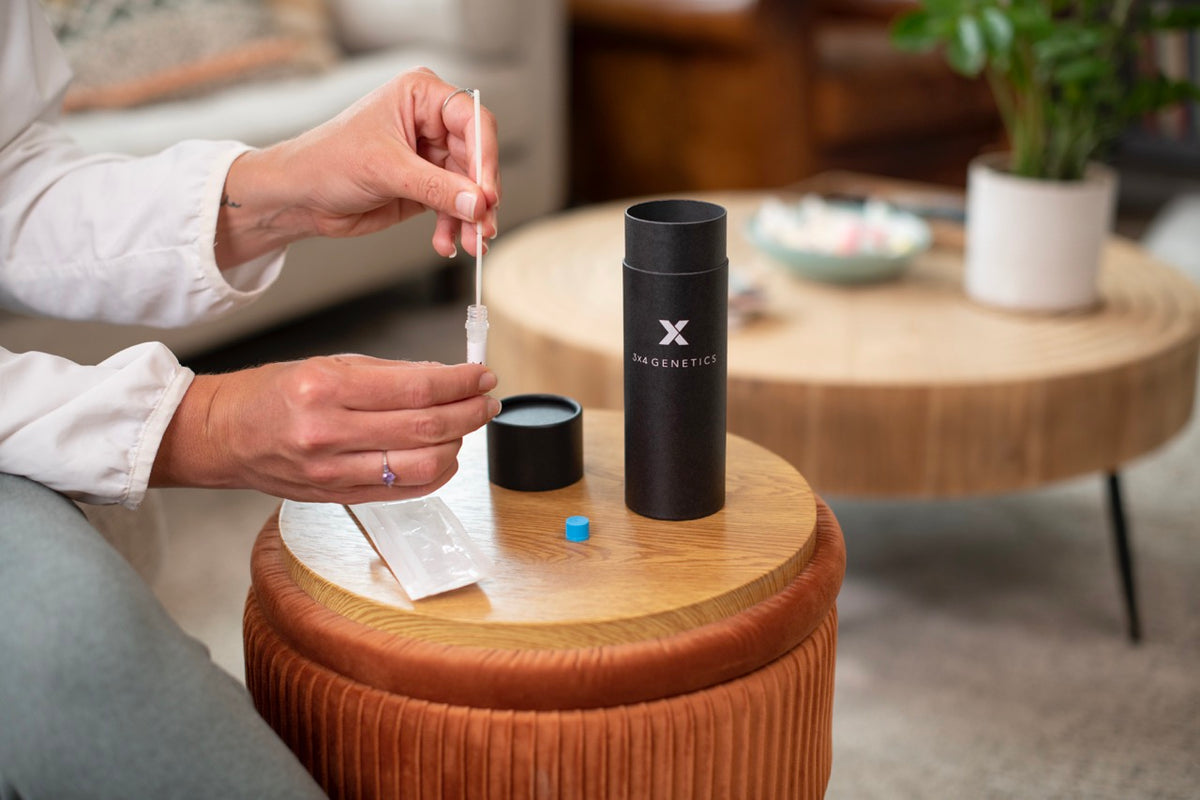
Quick answer A DNA health test tells you how your body tends to work: how you process nutrients, caffeine and fat, how your appetite and blood sugar respond to food, how well your cells handle inflammation, detoxification and oxidative stress, and how you recover from training. It does not diagnose disease. The 3X4 Genetics Test reads these tendencies from a cheek swab and reports them as 35 pathways across 10 key health areas, with a plan for what to do about each one. |
For many, getting on top of their health is an unending battle, but what if there were a way to shine a light on that uncertainty? Genetic or DNA health testing can help to eliminate a lot of the guesswork by highlighting your predisposition to developing certain illnesses or diseases, or showing you how to optimize a healthy lifestyle.
While this may sound challenging, it gives you the unique opportunity to make very specific and well-educated changes to your lifestyle. Preventive treatment and lifestyle changes can be a literal lifesaver! So, are these tests worth it? We certainly think so.
What exactly is a DNA health test?
A DNA test can uncover variations in the body's genes, chromosomes, or proteins and can be performed using either blood, skin, hair, tissue, or amniotic fluid. They're used to determine the well-being of an individual by analyzing the various genetic pathways and can help to pinpoint any predisposition you may have for developing certain illnesses later in life as well as identifying any existing ones.
What This Article Covers
Experiencing worrying symptoms that you fear may indicate an illness? Getting tested can assist in identifying the presence of a particular disease in the body or whether or not you're likely to develop a disease based on your genetic results AND your lifestyle
Certain genetic variations are especially problematic as they can cause health disruptions and affect the way your body functions due to altered gene expression. DNA health testing can help you to determine whether or not you have these genetic variations.
getting a DNA test for health is super informative and can be the key to unlocking your #3X4supergenes, allowing you to know how best to approach various areas of your health, such as your most optimal diet and fitness regime, as well as other lifestyle factors specific to your unique genetic makeup. Think of it as a cheat's guide to tapping into the best possible health!
What do DNA health tests look at?
Here are the various types of DNA tests and what they look at:
Here are the various types of DNA tests and what they look at:
Gene Tests
Tests that analyze your full DNA structure are called genomic tests, however, it is also possible to analyze one or a few specific genes. The purpose of a gene test is to look for gene variations or changes in your genes, these can tell us whether or not you're at risk of developing certain genetic disorders.
Chromosomal Tests
Tests that analyze your chromosomes or strings of DNA are called chromosomal tests. They're helpful in detecting the cause of genetic disorders by looking for alterations in how the genes are sequenced.
Protein Tests
Proteins, as you may well know, are vital for the health and growth of the body, so major problems with proteins can actually indicate DNA alterations that may lead to genetic disorders. Protein tests are used to discover any by-products of chemical reactions in the body's cells.
What diseases can be detected through genetic testing?
It's important to note that DNA tests may not detect everything, moreover, a positive result doesn't automatically mean that you'll definitely develop a disease. Equally, a negative result doesn't mean that you’ll always be one hundred percent in the clear. Lifetsyle plays a HUGE role in how your genes play out.
Some of the diseases that can be detected through high penetrance genetic tests are breast and colon (colorectal) cancers, cystic fibrosis, down syndrome, Huntington's disease, phenylketonuria, and sickle cell disease.
At 3X4 Genetics, we believe in the usefulness of DNA/genetic testing for health and the prevention of disease. We conduct low penetrance, health-centered DNA tests for diabetes, intolerances, bone health, inflammation, and oxidative stress, as well as dementia, brain function, and memory. These are just some of the key diseases of lifestyle that we test for.
Should I get a DNA test for my health?
If you want to know the state of your health, it's worth considering the 3X4 Genetic Test. With this comprehensive test, you're provided with a full blueprint of your body's health, and one of our practitioners can walk you through the results.
You’ll learn what these results could mean for your well-being and the best possible ways to optimize your health, including your weight, blood sugar regulation, and fitness capacity, as well as your brain, heart, and hormonal health.
Try the 3X4 Genetic Test Today, it's an industry-leading, direct-to-consumer genetic test backed by 20+ years of scientific research and clinical practice, what’s more, it’s trusted by health practitioners the world over! Make quality of life your top priority, your health is your wealth.